Everyday clothing · Fabric & care
What Helps Cotton Lounge Pants Hold Up to Everyday Wear?
The best lounge pants feel easy from the first wear—and keep earning their place in your drawer after plenty of sofa time, errands, and laundry days. Fiber, construction, fit, and care all play a part in how well cotton pants handle the routine.
Softness may be what draws you to a pair of cotton lounge pants, but durability is what makes them a favorite. Everyday clothing is asked to do a lot: stretch when you sit, move comfortably as you go about your day, and emerge from repeated washing ready to be worn again. No fabric is immune to time and friction, yet thoughtful choices can help pants retain their feel and shape longer.
Looking at organic cotton garments from Coyuchi offers a useful way to understand the details. The brand’s Women’s Pima Organic Knit Jogger, for instance, is described as a breathable knit made from organic Pima cotton, with an elastic waistband and pockets. Those practical features offer a helpful reference point—not a promise that any garment will last forever. The broader lesson is to look beyond a label or a first impression and consider how the fabric, seams, fit, and care instructions work together.
Start with the kind of cotton—and the way it’s made
“Cotton” describes a fiber, not one single fabric. A pair of lounge pants could be made from a smooth woven cotton, a flexible cotton knit, or a textured fabric with a different weight and hand-feel. That distinction matters because the fabric’s structure influences how it moves, how it feels against skin, and how it responds to regular wear.
Knit fabrics are formed from connected loops, giving them natural flexibility. That stretch can make a knit pair especially comfortable for lounging, bending, and moving around at home. Woven fabrics are made by interlacing yarns and may feel crisper or more structured. Neither construction is automatically more durable: the quality of the yarn, the density and consistency of the fabric, the garment’s pattern, and the way it is cared for all influence performance.
When assessing fabric, look for a surface that feels reasonably even and substantial for its intended use. Very thin fabric can feel lovely and light, but areas that experience frequent friction may show wear sooner. Heavier fabric may feel reassuring, although it can also be warmer or less flexible. The right balance depends on whether you want airy sleepwear, relaxed year-round pants, or a cozy layer for cooler evenings.
Organic cotton describes how cotton is grown and processed under particular standards; it is not, on its own, a guarantee of a fabric’s strength or lifespan. Certifications such as GOTS can help shoppers understand aspects of textile production, but practical durability still depends on the finished garment. Consider fiber, fabric construction, stitching, fit, and the care label together rather than relying on one attribute to tell the whole story.
Some garments also become softer with wear or washing. That can be a pleasant change, but softness and durability are separate qualities. A fabric that feels gentle is not necessarily fragile, and a firm fabric is not necessarily long-lasting. The useful question is whether the material feels suitable for how often you expect to wear and wash the pants.
Inspect the seams and stress points
Fabric gets much of the attention, but seams are where separate pieces become a wearable garment—and where movement puts construction to the test. Sit, stretch, and walk in lounge pants, and the stitching around the inner leg, seat, and waistband is repeatedly asked to flex. Neat, even stitching and seams that lie comfortably against the body are good signs to look for.
Pay special attention to areas that experience regular pulling or rubbing. The inner thighs may encounter friction while walking. The seat and crotch need enough room to move without the garment being drawn tight. Pocket openings can also be tugged as hands go in and out or as small items are carried. Well-finished edges and secure stitching in these areas can help a garment cope with ordinary use.
It can be difficult to assess every construction detail before wearing a pair, especially when shopping online. Product descriptions may identify fabric type, waistband construction, pockets, or place of manufacture, but they do not always provide stitch counts or technical testing. Use the details that are available as clues, and check the return policy if fit is uncertain. A garment that suits your body and routine is less likely to be strained by constant pulling or adjustment.
Look for consistency rather than visual complexity. Extra decorative details do not necessarily make pants more durable. Straight seams, clean finishes, and a waistband that feels securely attached may be more useful indicators for everyday wear than a long list of design features. If a pair has a drawstring, check that it moves smoothly and that the openings are finished neatly. If it has pockets, consider whether they sit flat and feel comfortable when used.
Fit is a durability question, too
Comfortable lounge pants should allow movement without being so loose that they constantly shift, twist, or catch. Equally, a snug fit that pulls across the hips, seat, or thighs can place extra tension on both fabric and seams. Fit is personal, but the practical test is simple: can you sit, stand, bend, and walk without feeling that the garment is working against you?
Try the movements you actually make in a typical day. Sit in a chair or cross your legs. Check whether the waistband stays comfortable and whether the fabric feels tight at the knees or seat. A waistband that digs in may lead you to tug at it repeatedly; pants that slide down can also prompt constant adjustment. Those small frustrations are clues that a different cut or size may suit you better.
Waistbands are especially important because they need to stay in place while accommodating everyday movement. An elastic waist offers flexibility, while a drawstring can provide a more adjustable fit. The quality of the garment’s construction matters more than the presence of either feature alone. Consider whether the waistband lies comfortably, whether it rolls or twists, and whether the pants remain secure without being cinched uncomfortably tight.
Length and rise can affect how fabric wears as well. Pants that are too long may drag on the ground, catching on shoes or accumulating dirt. A rise that feels too short can place tension on the crotch seam when you sit. Choosing the right length and cut for your height and routine may help prevent avoidable strain and keep the garment comfortable throughout the day.
Pockets: handy, but worth thinking about
Pockets can make lounge pants more useful for a quick trip outside or for carrying a small item around the house. They can also change the way a garment hangs. A deep pocket loaded with a phone or keys adds weight and movement to one area, which may pull on the pocket opening or side seam over time.
For everyday comfort, try the pockets before deciding they’re a bonus. Do they lie flat when empty? Do they pull the fabric out of shape when you put a hand inside? Are they positioned where you naturally reach? If the pants are mainly for relaxing at home, you may prefer a cleaner drape. If you use them for errands, pockets may be worth the added practicality—just avoid carrying heavy items in a lightweight pair.
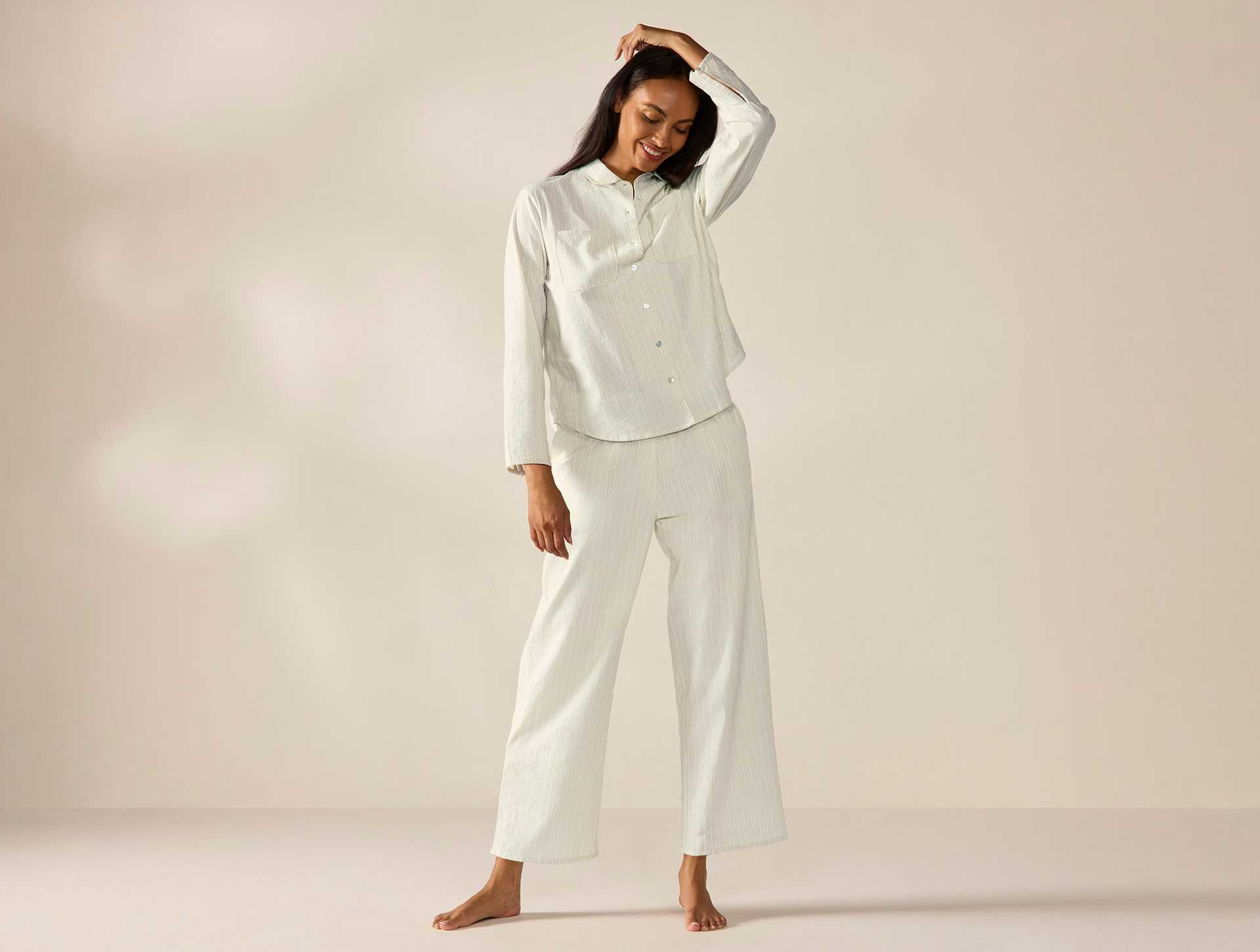
These are the kinds of details that make a garment feel thought through. Coyuchi’s organic cotton pants include examples of practical design features such as elastic waistbands and pockets. The Women’s Isla Organic Cotton Long Sleeve Pajama Set, for example, pairs a garment-washed organic cotton poplin top with matching pants featuring an elastic waistband and front pockets. It is designed as sleepwear rather than a dedicated jogger, but its fabric and construction details provide a relevant reference when comparing cotton pants for relaxed routines. Explore the Women’s Isla Organic Cotton Long Sleeve Pajama Set.
Friction is part of everyday wear
Even well-made pants experience friction. It happens when fabric rubs against itself or another surface: at the inner thighs, beneath a bag strap, against a rough chair, or where a hem meets shoes. Repeated rubbing can gradually affect the surface, especially if the garment is tight in the area or the fabric is very lightweight.
You cannot avoid all friction, and you do not need to treat lounge pants as delicate. Still, a few practical habits help. Choose a cut that allows movement, avoid carrying unnecessarily heavy items in pockets, and notice whether a particular activity consistently strains one area. If you wear the same pair every day, rotating between a few garments gives each one a break between wears and washes.
Pilling—small balls of fiber that appear on fabric—is another common result of friction. It can occur on cotton knits and other fabrics, often in high-contact zones. Pilling does not automatically mean a garment has failed; it is a surface change. Gentle laundering, turning garments inside out, and reducing rough contact in the wash may help limit abrasion. If pills appear, remove them carefully with a fabric comb or other suitable tool, following its directions and avoiding pressure that could snag the material.
It is also wise to respond early to small problems. A loose thread can often be secured before it unravels further; a minor seam opening may be easier to repair than a larger tear. Avoid pulling at a snag, which can distort a knit or loosen nearby yarns. A small amount of attention can extend the useful life of clothing without making everyday wear feel complicated.
Laundry habits that help preserve shape and feel
Care instructions are part of a garment’s design. Following the label is one of the simplest ways to avoid unnecessary stress from heat, agitation, or incompatible cleaning methods. Many cotton lounge pants can be machine washed, but recommended water temperature and drying settings vary. Check the specific instructions rather than assuming every cotton garment should be treated the same way.
For pants whose label calls for a cold, gentle wash, that approach can help reduce exposure to heat and vigorous movement. Washing with similar colors can also help prevent color transfer. Turning garments inside out may reduce surface rubbing, particularly for knits or pieces with a textured finish. A full but not overcrowded machine load gives clothes room to move; a tightly packed load can increase friction and limit rinsing.
Use detergent according to its directions. More is not necessarily better: excess detergent can be difficult to rinse out and may leave residue in fabric. Skip harsh treatment unless the care label allows it. If a stain appears, address it in a way that suits the fabric and follow product directions, testing an inconspicuous area when appropriate.
Drying deserves equal attention. High heat can contribute to shrinkage or affect the feel of cotton, depending on the fabric and garment construction. When the care label recommends tumble drying on low, use that setting and remove the pants promptly. If air-drying is suitable, reshape the garment and hang or lay it in a way that does not pull on the waistband or stretch damp fabric. Avoid leaving wet clothing bunched up for long periods.
Wash pants when they need washing, not automatically after every short wear if they remain clean and fresh. Less frequent laundering can mean less cumulative agitation, though personal comfort and hygiene should guide the decision. If you do wash a pair often, gentle handling and correct drying become especially useful routines.
What to look for when comparing cotton lounge pants
Shopping for durable loungewear does not require a textile engineering degree. A few focused questions can make comparisons clearer, whether you are choosing an online favorite or checking a pair in person.
- What is the fabric? Look for whether it is knit or woven, and consider whether the weight and feel suit your climate and routine.
- How does the fabric feel? Check for a consistent surface and a level of substance that feels appropriate for how frequently you expect to wear the pants.
- Does the fit allow movement? Sit, bend, and walk. Notice pulling across the seat, hips, thighs, or knees.
- Are the seams comfortable and tidy? Pay attention to the inner leg, seat, waistband, hem, and pocket openings.
- Will the waistband work for you? Consider comfort, adjustability, and whether it stays in place without excessive tightening.
- Do the pockets suit your routine? Check their position and how they affect the drape, especially if you tend to carry items.
- Can you care for them as directed? Review washing and drying instructions before committing to a garment that needs a routine you will not follow.
Product descriptions are useful, but they are not the entire story. A fabric label may identify organic cotton, and a description may mention a relaxed fit or machine washing, but neither tells you exactly how the pants will behave in your own life. When possible, try them on, check the construction, and consider how the garment will be used. A pair meant for slow mornings at home may not need the same features as one worn for travel, errands, and long days on the move.
A note on organic cotton and responsible sourcing
Organic cotton can be an important consideration for shoppers who want to understand how fibers are sourced and processed. Certifications provide a framework for evaluating certain production standards, while details about where a garment is grown, woven, or made offer additional context. These details speak to sourcing and production; they should not be confused with a standalone durability rating.
Longevity is also a practical part of responsible clothing use. Wearing garments regularly, laundering them thoughtfully, mending small issues, and choosing styles that fit your real routine can help you get more use from what you own. A pair of pants that stays comfortable and useful is more likely to remain in rotation than one that looks appealing but feels awkward after an hour.
For cotton pants, the most useful view is a balanced one: consider the material and its origin, but also examine fit, stitching, maintenance, and your own habits. No fiber or certification can promise that a garment will be immune to wear. The aim is to make an informed choice and care for it in a way that respects both the fabric and the everyday life it serves.
The bottom line
Cotton lounge pants hold up best when several things work together. A suitable fabric gives the comfort and flexibility you want; thoughtful seams support movement; a comfortable fit avoids unnecessary strain; and practical details like pockets make sense for how you wear the garment. Just as important, washing and drying according to the care label can help preserve the fabric’s feel and shape over time.
Before choosing a pair, think about your actual routine. Are these pants mostly for sleep, home, or quick trips outside? Do you prefer a breathable knit or a woven feel? Will you wash them frequently? The answers can point you toward a style that is not only soft on day one, but comfortable and useful through many ordinary days.
There is no single secret to durable loungewear. It is the combination of good judgment at the point of purchase and gentle, consistent care afterward. Look closely at the details, choose a fit that moves with you, and let comfort be something that lasts beyond the first wear.
Quick answers about cotton lounge pants
Does organic cotton automatically last longer?
Not necessarily. Organic describes how cotton is produced under defined standards, not how long a specific garment will last. Fabric construction, stitching, fit, and care also matter.
Is a knit or woven cotton better for lounging?
Neither is universally better. Knits often offer more natural flexibility, while woven cotton can feel more structured or crisp. Choose based on comfort, climate, and how you plan to wear the pants.
How can I help cotton pants keep their shape?
Follow the care label, use the recommended wash and drying settings, avoid unnecessary heat, and reshape or dry the garment in a way that does not pull on damp fabric.